
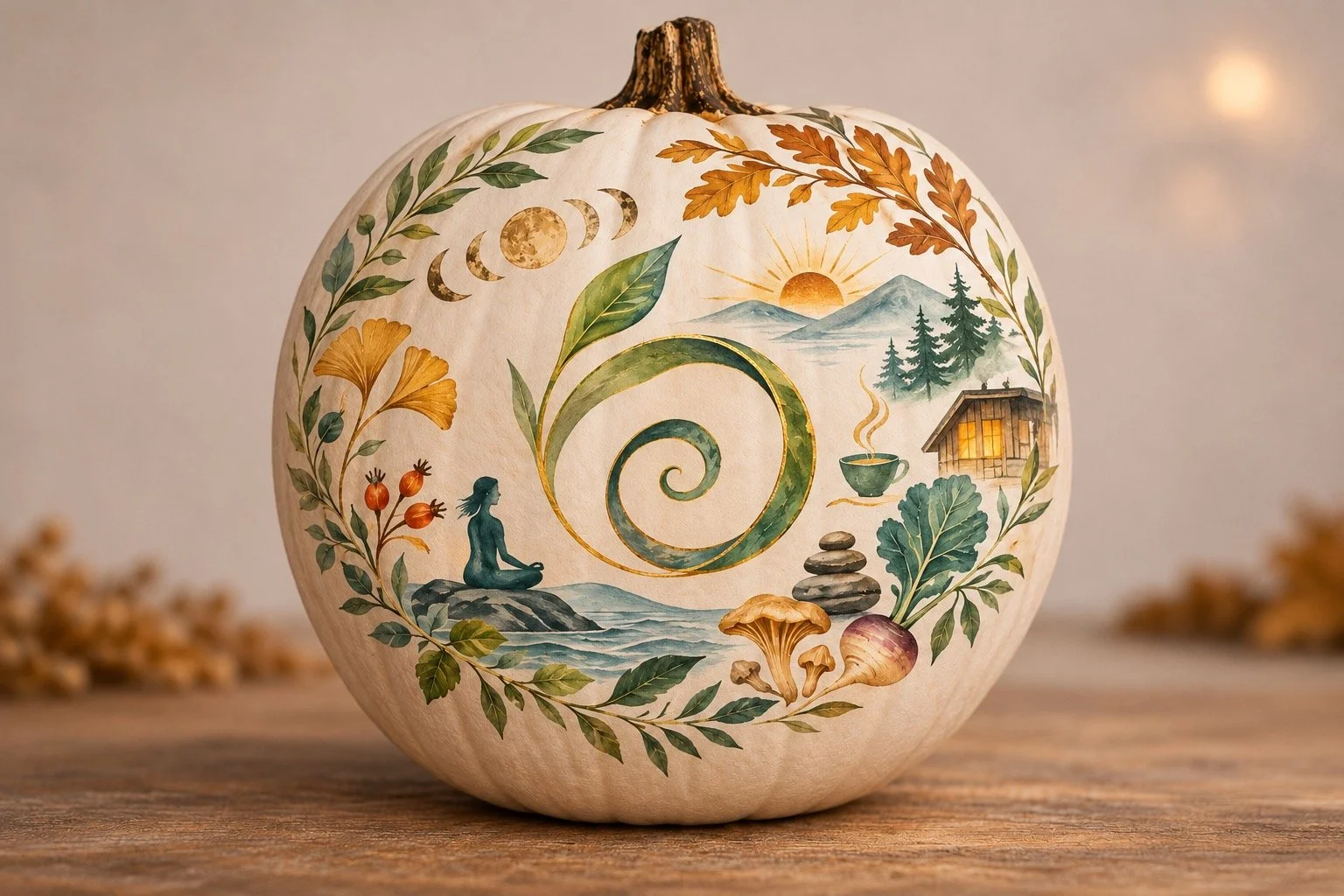
Autumn is a season of gathering and preserving. The harvest comes in, seeds mature and deciduous trees recover nutrients from their leaves before shedding them. In traditional Chinese medicine, this movement towards consolidation is central to understanding the season and how to live in alignment with its energy.
Our calendars often tell a different story. Work gathers pace after summer and the weeks before December fill quickly. Autumn offers another kind of work: gathering what has grown, sorting what has accumulated and deciding what to carry forward.
This is what interests me about seasonal living. As a public health doctor and Sophrologist, I explore how everyday habits and conscious awareness support our health and experience of life. Alignment means recognising each season’s qualities and allowing them to support how we live. For autumn, this means choosing where to direct our effort, using the season’s gathering quality to support clearer, more deliberate action.
Traditional Chinese medicine describes autumn through growing Yin and the Metal phase. Traditional Irish harvest and remembrance customs offer a different language for gathering and preserving. Both invite us to recognise what this season offers and prepare for the next.
When does autumn begin
The answer depends on the calendar. In Denmark and the rest of the Northern Hemisphere, meteorological autumn runs from 1 September to 30 November. Astronomical autumn begins at the September equinox, usually around 22 or 23 September, and continues until the December solstice.
The traditional Chinese calendar places autumn earlier. Liqiu, the Beginning of Autumn, falls around 7 or 8 August. Lidong, the Beginning of Winter, arrives around 7 or 8 November. The equinox therefore sits near the middle of autumn. Although the Chinese calendar is lunisolar, these seasonal markers follow the Sun, rather than the phases of the Moon.
In the traditional Irish calendar, Lughnasadh marks the beginning of autumn and the harvest season around 1 August. Samhain marks the transition into winter. It begins at sundown on 31 October, the evening now widely known as Halloween, and continues through 1 November.
By early November, winter has begun in the traditional Irish calendar and is approaching in the Chinese calendar. Meteorological autumn still has several weeks to run. Whatever the calendar, living seasonally begins with noticing the changing energy and conditions around us.
Aligning with the changing balance of Yin and Yang
In Chinese philosophy and traditional Chinese medicine, Yin and Yang describe complementary, interdependent qualities of energy. Yang is associated with warmth, activity and outward movement; Yin with coolness, receptivity and inward movement. Their balance changes throughout the day and year. Yin’s receptive quality involves attending and allowing: listening closely, noticing what is present and giving experience time to settle.
Autumn is a period of increasing Yin and declining Yang energy. It is the transition towards winter, when Yin reaches its fullest seasonal expression. The Huangdi Neijing, a foundational text of traditional Chinese medicine, describes autumn in terms of gathering and settling. Its seasonal advice includes retiring earlier, keeping the mind calm and gathering attention inward.
Within this seasonal model, spring supports emergence, summer growth, autumn gathering and winter storage and rest. Each phase benefits from what came before and prepares the conditions for what follows. Autumn’s work is to consolidate: to gather the results of earlier activity and make them useful. Winter places greater emphasis on conservation and recovery. Both support our capacity to engage fully when spring and summer return.
Autumn is not slowing down to inactivity. Autumn’s inward movement involves purposeful work: discernment, integration and preparation. We may spend less energy initiating and expanding, while giving more attention to refining what is underway. Working with the season means changing the quality and direction of our effort.
Consolidation and turning experience into wisdom
Gathering is one of autumn’s central themes. Bringing in a harvest takes work: it must be collected, sorted and stored if it is to sustain people through winter. We can approach the year’s experience with similar care, identifying what we have gained and how to use it.
Experience does not automatically become wisdom. We can complete a project, navigate a difficult period or learn something new, then move straight on without understanding what it has taught us. Consolidation gives us the opportunity to recognise what we have gained. Integration allows that learning to become part of how we act.
Set aside a quiet autumn afternoon and choose one significant experience from this year. What did it teach you? What matters most in that learning? How could you put it into practice now?
A lesson about overcommitment might help you decline an extra task. Recognising what made a collaboration work could improve a current project this autumn. The learning becomes useful when it changes something we do.
Reflection, a considered lesson and the choice to put it into practice allow experience to become wisdom. Autumn’s harvest becomes a resource for the months ahead.
Metal and choosing what to retain
Traditional Chinese medicine associates autumn with Metal, one of the Five Phases, or Wuxing. These describe interdependent patterns of energy and change. Metal’s seasonal movement is inward and consolidating, with an emphasis on preserving what has value, like something precious.
The image of a metal blade also expresses its cutting quality: removing what is no longer essential so that what matters can be preserved. Discernment, refinement and boundaries give this seasonal theme practical meaning.
Discernment comes first. Before cutting anything away, we need to distinguish what is valuable from what has simply accumulated. This autumn, consider where your attention goes. Which activities contribute something worthwhile? Which continue mainly through habit, expectation or a reluctance to say no?
Refinement means improving what we retain. This autumn, it might mean simplifying a project or adjusting a routine using what the year has taught you. Metal adds the work of shaping our learning into something useful.
Boundaries give these choices practical form. Preserving time for something important requires placing limits elsewhere. This autumn, that might mean agreeing a clearer scope for a project, reducing an unnecessary recurring commitment or protecting an evening that would otherwise fill automatically.
At home, the same principle can guide seasonal preparations. Sort what has accumulated, put away summer belongings and keep what you need for the colder months accessible. Clearing a space makes it easier to use and appreciate what you retain.
Metal brings clarity to autumn’s work. Choosing what to cut away and what to preserve requires attention and considered action. The emotional experience of endings deserves its own attention, as we explore later.
Harvest and gratitude at Mabon
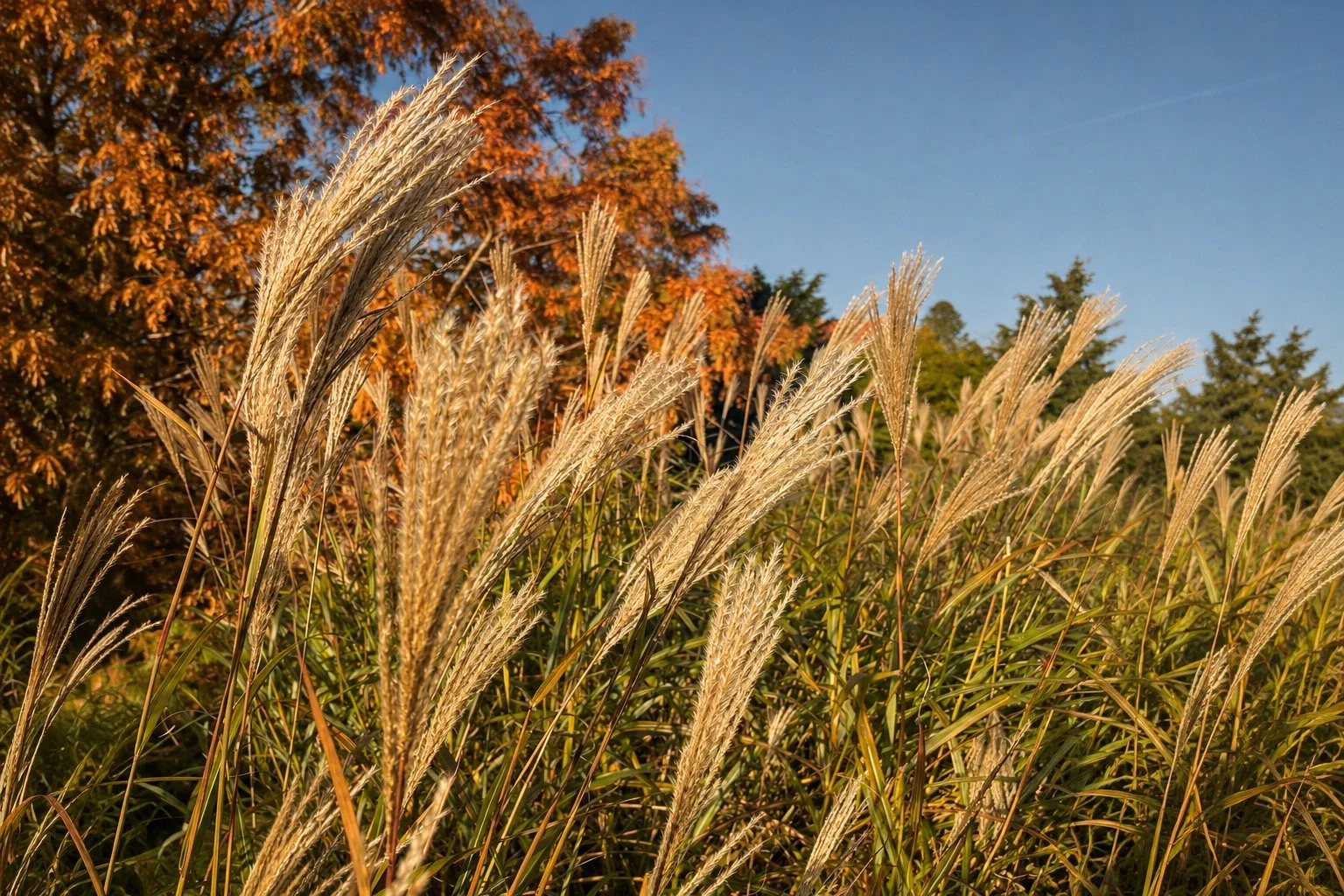
At the autumn equinox, daylight and darkness are approximately equal. Many modern Pagans celebrate this point in the year as Mabon, often described as the second harvest festival. Its themes include gratitude, abundance and the transition towards the darker months.
The harvest theme reminds us to appreciate what already sustains us before deciding what to change.
Looking back over this year, what has sustained you? What has come to fruition? What have you become better able to do?
Include developments that do not appear on a list of achievements. Asking for help sooner, recovering from a demanding period or returning to an activity you enjoy can also be worth recognising.
There is still time this autumn to mark your own harvest. Share a seasonal meal, thank someone whose support has mattered or write down what this year has given you.
Samhain and remembering those who came before us
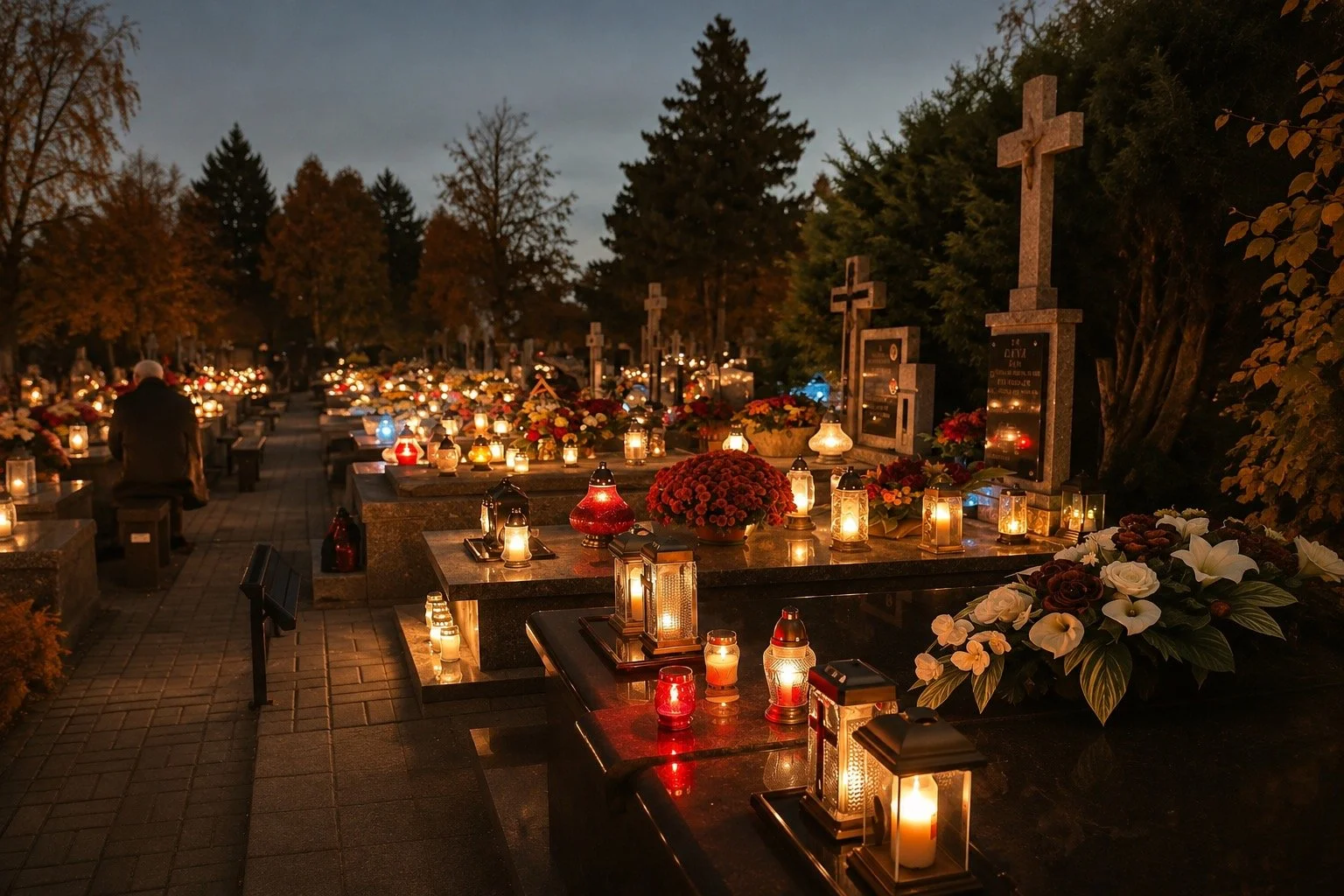
Samhain is a Gaelic festival marking the beginning of winter. In Ireland, recorded customs include feasting, disguises and divination. There was also a belief that the dead might return to the family home. This connection with the spirit world is often expressed today as the veil between the seen and unseen worlds being at its thinnest.
This brings a different seasonal emphasis: remembrance, mortality and those whose lives shaped our own. The preparation for winter includes recognising the support and knowledge we have inherited.
Around this time of year, remembrance can take a simple form. Cook a family recipe, look through photographs or tell a younger family member about someone they never knew. These small acts keep memories present and remind us how much we receive through others.
Grief and acknowledging endings
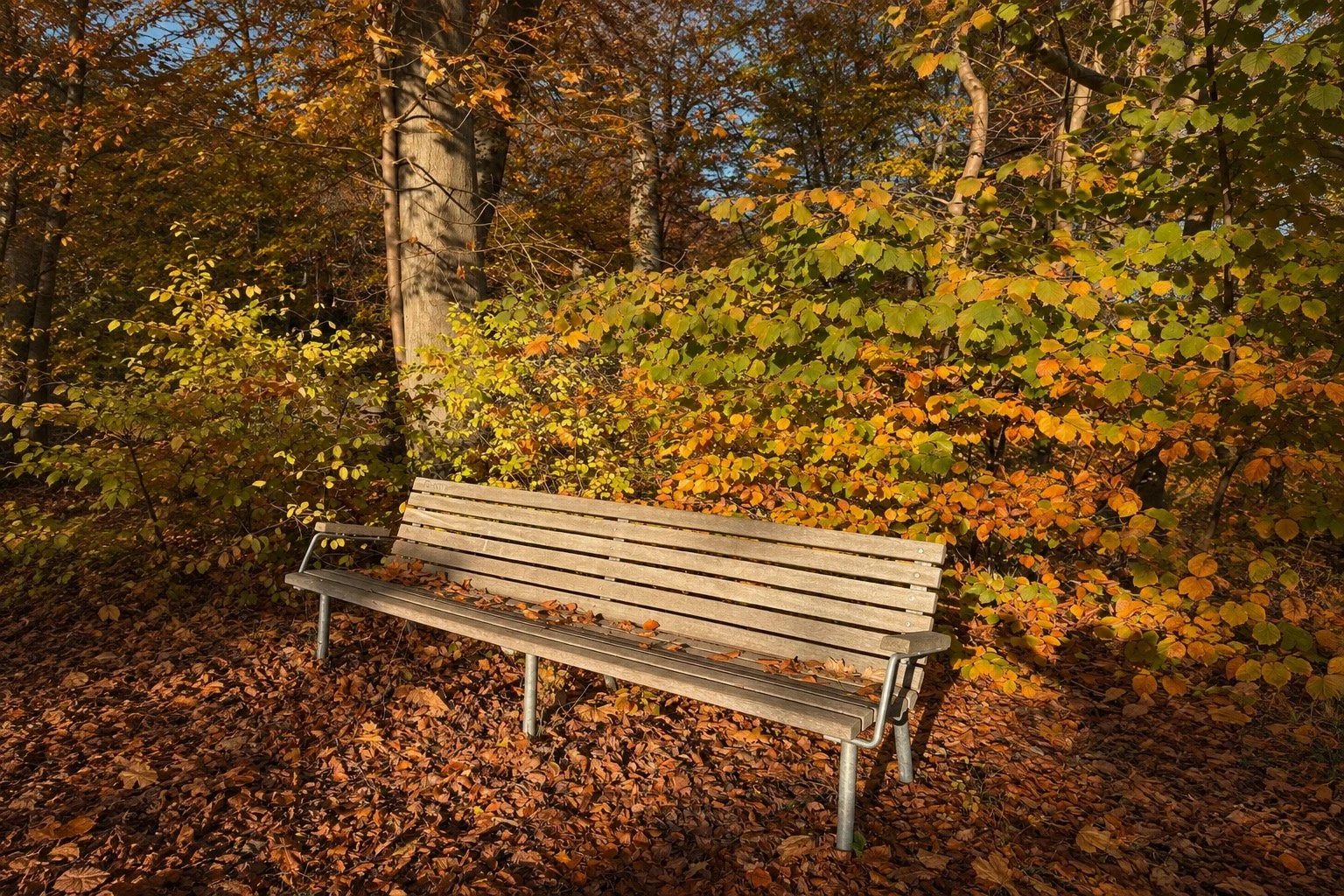
In traditional Chinese medicine, the Metal element is associated with grief. Autumn's visible changes provide a setting in which to reflect on loss and endings, although grief itself follows no seasonal timetable.
This autumn, there may be something to acknowledge: a person you miss, a summer that ended differently from what you hoped, or a project that has reached its conclusion. Giving this attention does not require you to resolve it or turn it into a positive lesson.
Some endings also have a practical dimension. Send the final message, complete the outstanding task or decide that something will remain unfinished. Where an ending can be marked clearly, it may free attention that has remained tied to it.
Autumn's theme of letting go becomes more useful when we are specific about it. What needs to be acknowledged, completed or set aside before winter? Some things can be released; others need continued care.

Nourishing ourselves as autumn turns towards winter
Yangsheng, often translated as “nourishing life”, is concerned with cultivating health and vitality through daily living. In traditional Chinese medicine, seasonal adaptation forms part of this approach. Autumn guidance gives particular attention to gathering resources, calming the mind and nourishing Yin.
The growing Yin of autumn shifts attention towards nourishment and consolidation. These also require active care. Preparing food, organising the coming weeks and maintaining the habits that sustain us are part of autumn’s work. As winter approaches, recovery can take a more deliberate place alongside that preparation.
Three simple priorities can support this seasonal transition: keep moving outdoors in daylight, prepare nourishing seasonal meals and allow recovery after demanding days.
As the evenings darken, consider how you spend the last part of the day. If work, messages and entertainment run together until bedtime, try creating a clearer transition. A quieter meal, a short practice or a designated time without a screen can give the evening a different pace.
The Sophrology practice and seasonal alignment
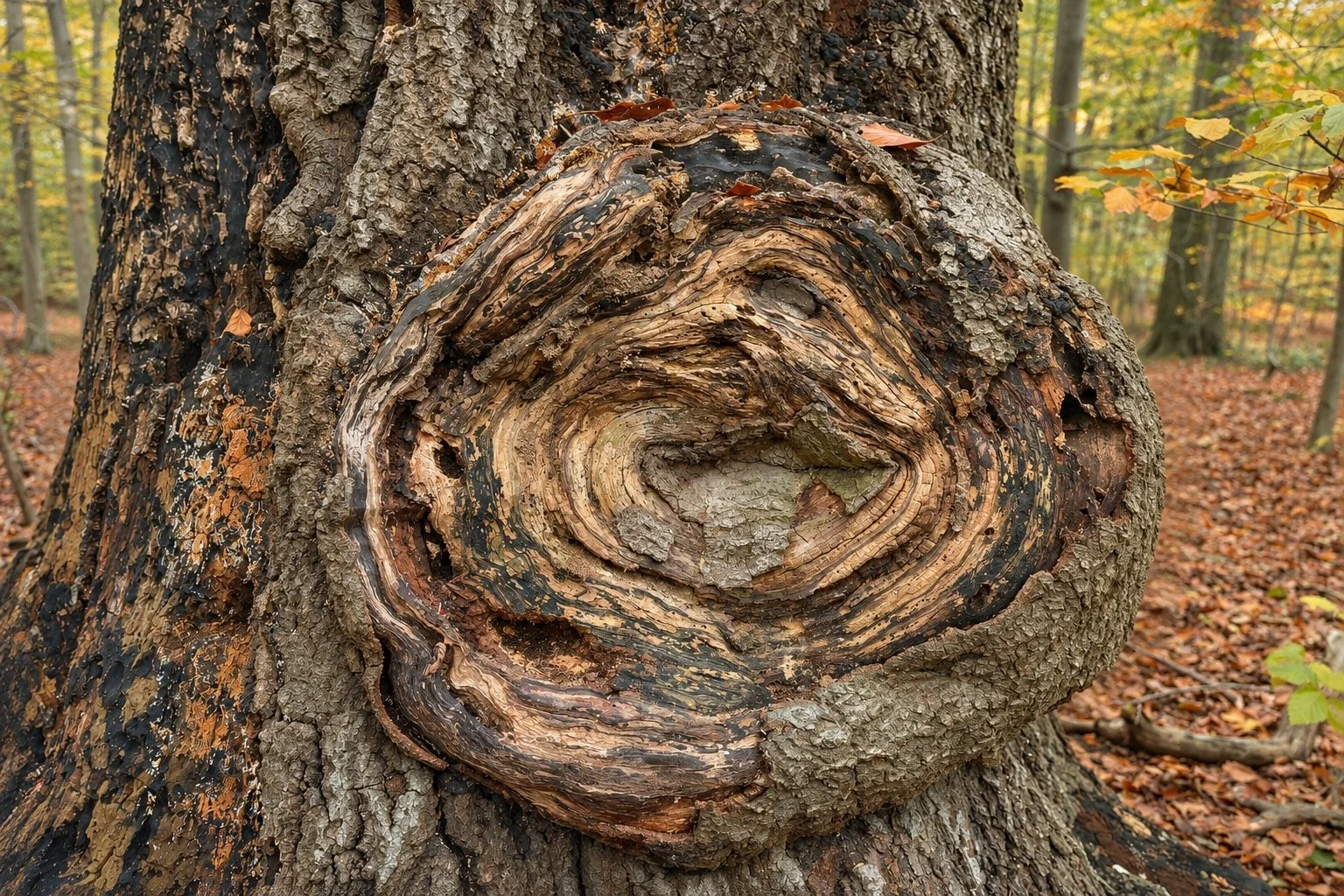
The Sophrology practice helps me explore this alignment through conscious experience.
Through breath, gentle movement, visualisation, contemplation and sound, I repeatedly bring attention to my body and my present state. With practice, this awareness becomes more available in daily life. I notice how I feel, where I am directing my energy and how I respond to the changing conditions around me.
The integration pause is central to this process. After an exercise, we sit quietly and notice our experience before continuing. This stillness involves conscious attention. I find a parallel with autumn here: gathering and absorbing experience is a meaningful part of the activity itself. The pause helps us recognise what we might otherwise move past.
This autumn, try bringing that pause into your day. After a meeting, a conversation or a demanding task, take a moment to notice your breathing, physical sensations and state of mind. Let the experience register before continuing; return later to anything that deserves reflection.
This develops a more attentive relationship with my own energy and the season around me. I recognise when to initiate, when to consolidate and when I need recovery. That awareness informs my actions as well as how I rest.
This autumn, gather what you have learned, refine what deserves your effort and act on what has become clear. Allow recovery to support that work as winter approaches.
For me, seasonal living offers a way to cultivate resilience throughout the year. Autumn’s active gathering turns the growth of spring and summer into resources we can use. Winter gives greater space to conservation and recovery. When the more outward months return, we can draw on both the wisdom we have gathered and the energy we have renewed. Each season has its work, and each helps sustain the next.
With love and care,
AnnA