
Becoming more human in the age of AI
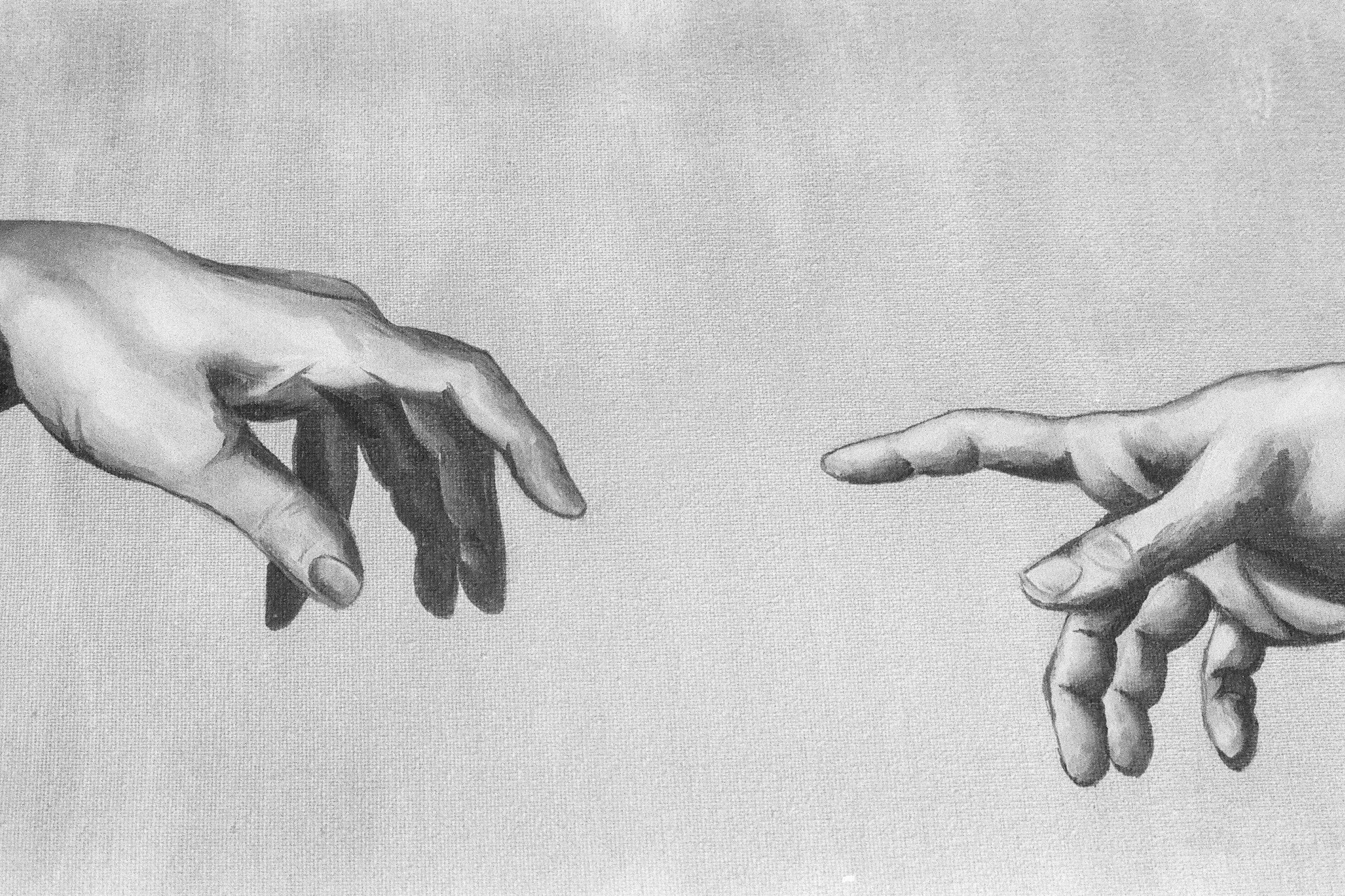
Photo credit: Unsplash
In the age of AI, becoming “more human” is not a philosophical luxury - it is a practical necessity.
But what does that actually mean? What are the capacities that are uniquely human, that AI does not have? And why should we care?
Let’s start with looking at the uniquely human capacities AI does not possess:
1. First-person lived experience (phenomenal consciousness)
Humans experience. Pain hurts. Love feels like something. A quiet room has a mood.
This felt sense - what philosophers call phenomenal consciousness or qualia - is not something AI has. AI can describe emotions, simulate language about experience, and predict how humans report feelings.
AI does not have a subjective point of view. It does not feel sensations, nor does it have an inner life.
This is not a technical gap that will be closed with more data or compute. It is an ontological difference. There is no evidence that computation alone produces lived experience.
2. Embodied intelligence rooted in a living body
Human cognition is inseparable from the body. Our thinking is shaped by the nervous system, hormones, breath, gut–brain signalling, immune and metabolic states, gravity, fatigue, illness, pleasure.
Your thinking changes when you are hungry, are grieving, are in nature or touching another human.
AI has no body that can be harmed, healed, exhausted, regulated, or soothed. It can model embodiment - it does not live it.
This distinction matters deeply for judgement, ethics, creativity, care, leadership, and healing.
3. Meaning-making rooted in mortality
As humans, we know we will die. That single fact reorganises everything: our values, priorities, love, courage, legacy, and sense of responsibility.
AI does not fear death. It does not age. It does not lose loved ones. It does not experience the feeling that time is slipping away.
Human meaning is shaped by finitude. AI can optimise goals, but it cannot care about them in an existential sense.
4. Moral responsibility and ethical agency
Humans are answerable. We can be held responsible because we understand harm as harm, experience guilt and remorse, can choose to act against self-interest, and can be forgiven - or not.
AI has no moral stake. It cannot be blamed or redeemed. It does not suffer consequences. It does not carry responsibility.
Any ethics “in AI” are borrowed ethics - encoded from human value systems.
5. Relational presence and intersubjectivity
Humans co-regulate.
Our nervous systems attune, e.g. a baby calms in a caregiver’s arms, two people synchronise breath and posture, and trust is felt, not calculated. This is not just communication - it is physiological coupling.
AI can respond empathically in language, mirror emotional cues, and support reflection. It cannot co-regulate nervous systems, offer embodied safety, or participate in relational healing.
This distinction matters profoundly in therapy, leadership, parenting, and community.
6. Creative emergence from lived paradox
Human creativity often - though not exclusively - arises from suffering, contradiction, moral tension, and not knowing who we are becoming. Artists, leaders, and healers do not simply recombine information. They transform it through lived struggle.
AI creativity is combinatorial, derivative, and pattern-based. Human creativity on the other hand is identity-forming, meaning-altering, and existentially risky.
7. Spiritual and existential inquiry
Humans ask existential questions:
Who am I?
Why am I here?
What is worth sacrificing for?
Not as abstract questions, but as felt inquiries that reorganise life and give it meaning.
AI can discuss spirituality. It does not seek it.
The real boundary
The boundary between humans and AI is not intelligence versus non-intelligence.
Rather it is living, feeling, embodied, mortal beings vs. non-living, non-experiencing systems

Photo credit: Unsplash
What this means for human development in the age of AI
As AI increasingly takes over cognitive, analytical, and optimisation tasks, human development must shift focus.
The goal is no longer to compete with machines on speed, memory, or pattern recognition.
The goal is to deepen the capacities that arise from being alive, embodied, relational, and meaning-making.
Core human capacities we should seek to actively develop therefore are:
Embodied awareness
The ability to sense the body, emotions, and internal signals in real time - not only after overload or breakdown. This underpins intuition, regulation, and grounded decision-making.Nervous-system regulation
The capacity to return to calm, clarity, and presence under pressure. Foundational for resilience, leadership, learning, and ethical judgement.Emotional literacy and integration
Not just naming emotions, but staying present with them without suppression or reactivity - especially in uncertainty and conflict.Relational presence and attunement
The ability to listen, sense, and respond in ways that create trust, safety, and collaboration - beyond words.Meaning-making and values clarity
The capacity to orient life and work around what truly matters, rather than what is merely efficient or rewarded.Ethical discernment grounded in lived experience
Judgement informed by consequence, care, and responsibility - not just rules or optimisation.Creative emergence under uncertainty
The ability to stay open, curious, and adaptive when there is no clear answer, allowing new ways of thinking and being to emerge.
In summary, human development must move
from cognitive to embodied,
from performance to regulation,
from information to meaning,
from efficiency to responsibility.
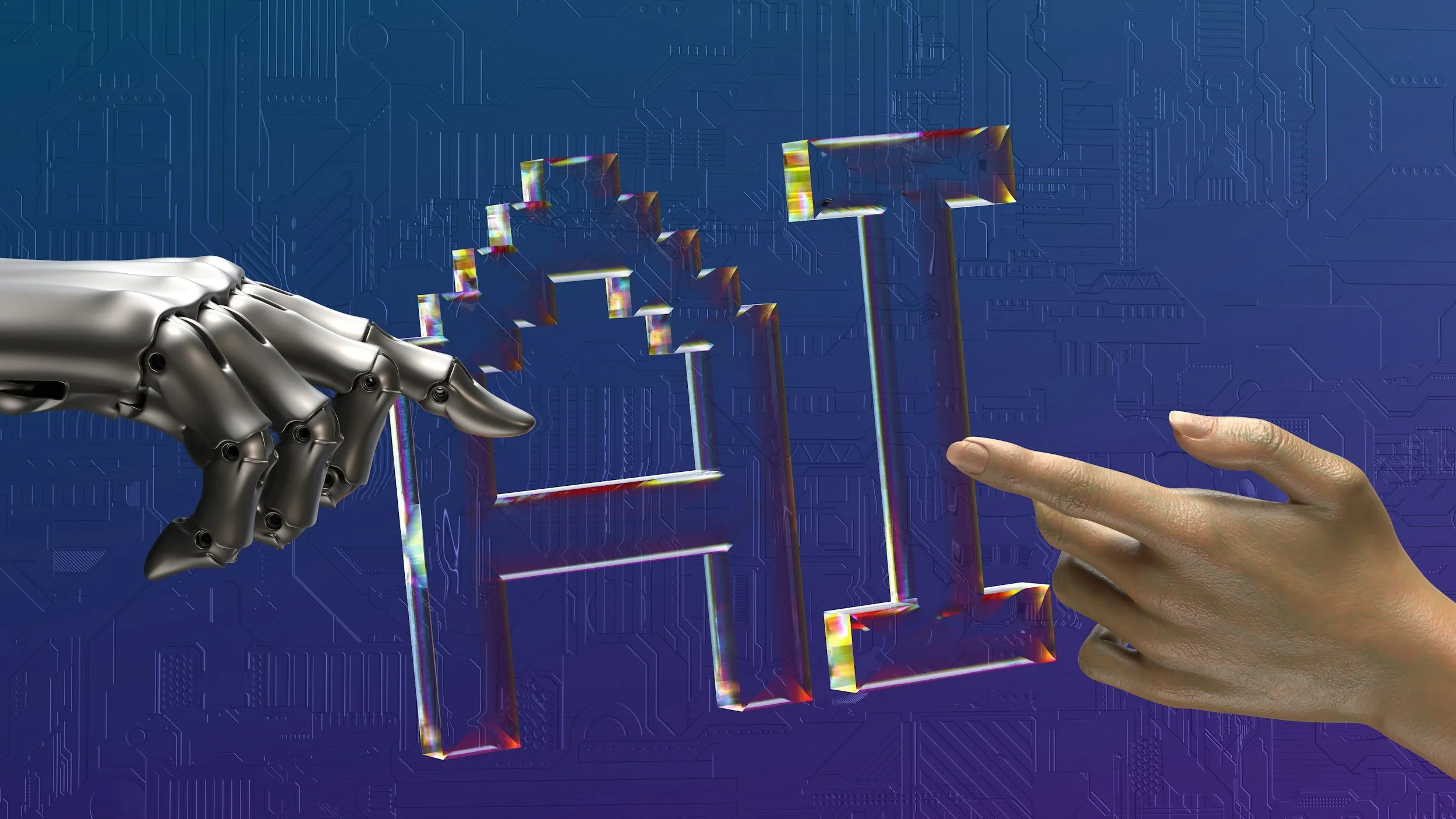
Photo credit: Unsplash
How this enables better collaboration with AI
When humans are regulated, embodied, and clear in their values, AI becomes a collaborator - not a replacement or a crutch.
In this state, humans:
Set direction, meaning, and boundaries
AI supports execution and exploration; humans decide why, for whom, and at what cost.Ask better questions
Embodied clarity improves judgement, framing, and discernment - directly improving AI outputs.Avoid over-delegation of agency
Humans remain responsible for decisions, ethics, and impact, rather than outsourcing accountability.Use AI to extend capacity, not replace presence
AI handles analysis, synthesis, and scale; humans bring context, care, and wisdom.Co-create rather than comply
Human intuition, creativity, and lived insight guide AI as a tool - not as an authority.
In conclusion
In an AI-shaped world, human development cannot remain purely cognitive.
If we do not actively develop our embodied and energetic intelligence, we risk becoming excellent thinkers who are disconnected, dysregulated, and exhausted.
AI will keep getting smarter.
The real question is whether we will become more embodied, present, and grounded - or less.
Ultimately human development in the age of AI starts in the body.
With Love and Care, Anna